
Something Feels Off
Have you ever woken up, looked in the mirror, and thought:
“Why do I feel fine… but look exhausted? ”
You drank your water.
You got decent sleep.
You’re trying to do everything “right.”
And still… something feels off.
It Might Not Be Your Routine
What most people don’t realize is this:
Some of the biggest stressors affecting your skin, energy, and overall health aren’t in your daily routine…
They’re in your sleep environment.
And because they’re subtle, they’re easy to overlook.
Let’s break down a few of the most common “hidden saboteurs.”
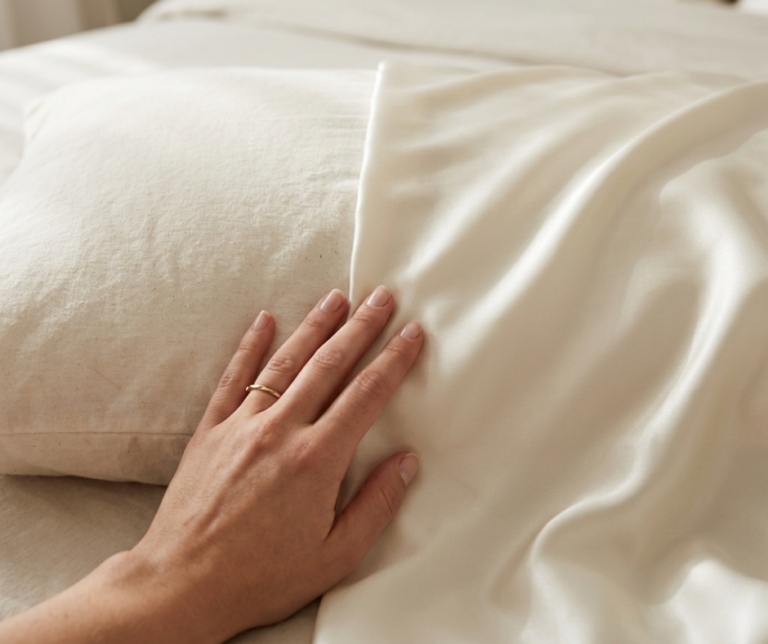
Saboteur #1 — Your Pillowcase
Your face is pressed against your pillow for 6–8 hours every night.
And if you’re using a traditional cotton pillowcase, there’s more happening than just friction.
Cotton is one of the most heavily treated and genetically modified crops. Prolonged contact, especially against delicate facial skin, can disrupt your skin barrier, microbiome, and overall balance over time.
Simple shifts:
- Switch to silk or satin to reduce friction
- Wash pillowcases frequently
Avoid chemical-heavy detergents and fabric softener.
Saboteur #2 — The Air You’re Breathing
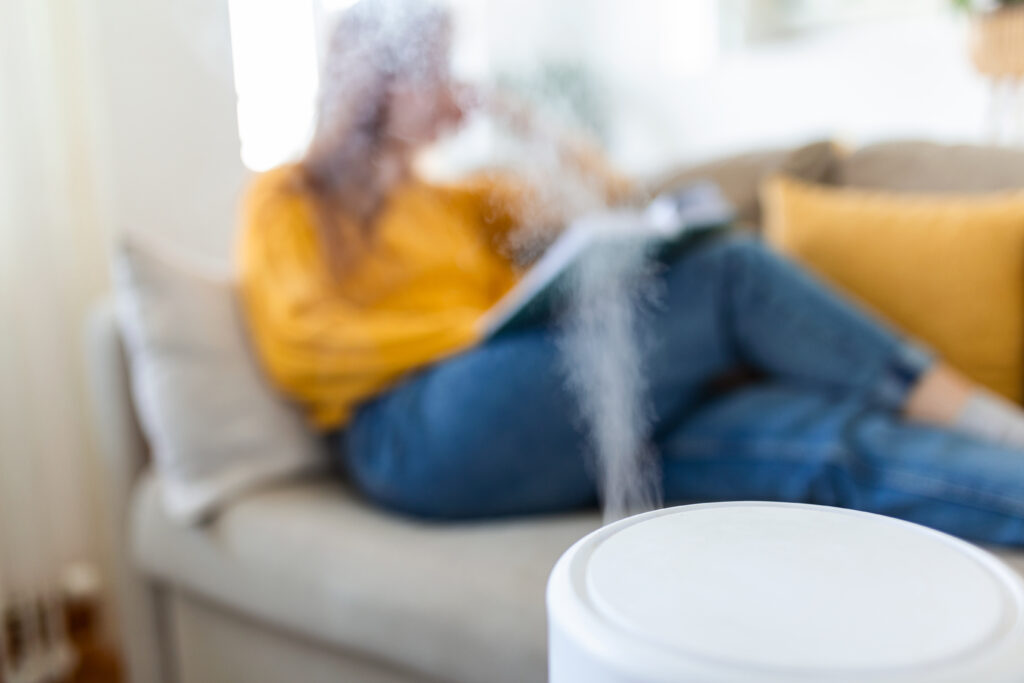
The air in your bedroom plays a bigger role than most people think.
Fans, air conditioning, and indoor systems can:
- dry out your skin
- circulate dust and irritants
- affect your respiratory system
Over time, this impacts both your skin quality and your body’s ability to recover overnight.
Simple shifts:
- Use a humidifier if your room feels dry
- Open windows when possible
Pay attention to dust, mold, and air quality
Saboteur #3 — Your Sleep Position
Your sleep position creates repeated pressure on your skin.
Night after night, this can lead to:
- creasing
- tension
- long-term structural changes
Simple shifts:
- Try sleeping on your back
- Alternate sides to reduce repeated pressure
- Use supportive pillows for proper alignment

Saboteur #4 — Your Nighttime Environment
What you do before bed directly affects how your body repairs itself.
Scrolling, stress, and overstimulation keep your nervous system active when it should be winding down.
This interferes with:
- sleep quality
- hormone regulation
- overnight repair processes
Simple shifts:
- Reduce screen time before bed
- Dim lights to support natural rhythms
Add simple breathing or stretching routines

Why This Matters More Than You Think
Your body does its deepest repair work while you sleep.
This is when:
- skin regenerates
- hormones rebalance
- detox pathways activate
- your nervous system resets
But if your environment is working against you…
Your body spends more energy compensating
instead of repairing.
Conclusion
If you’ve been doing “all the right things” but still not seeing or feeling the results…
It may not be about doing more.
It may be about removing what’s quietly working against you.
Sometimes the smallest, most overlooked factors, like your pillow, your air, or your nighttime habits, can have the biggest impact over time.
When you start supporting your body during the hours it’s designed to recover…
Everything else begins to fall into place more naturally.
