

Red light therapy.
Infrared therapy.
Photobiomodulation.
Healing light.
Whatever name you know it by, light therapy has quickly moved from niche wellness circles into the mainstream conversation around biohacking, recovery, longevity, and cellular wellness.
Professional athletes use it.
Recovery clinics use it.
Wellness practitioners and biohackers increasingly explore it as part of their routines for supporting energy, recovery, and nervous system regulation.
And while red light therapy may feel like a newer wellness trend, scientific interest in the relationship between light, mitochondria, ATP, and cellular energy has been growing for decades. Research into photobiomodulation continues to expand across rehabilitation, sports medicine, and regenerative wellness fields.¹ ²
At Julie E Health, light-based wellness tools have been part of the conversation long before biohacking became mainstream.
So why is healing light receiving so much attention now?
What Is Red Light Therapy and Photobiomodulation?
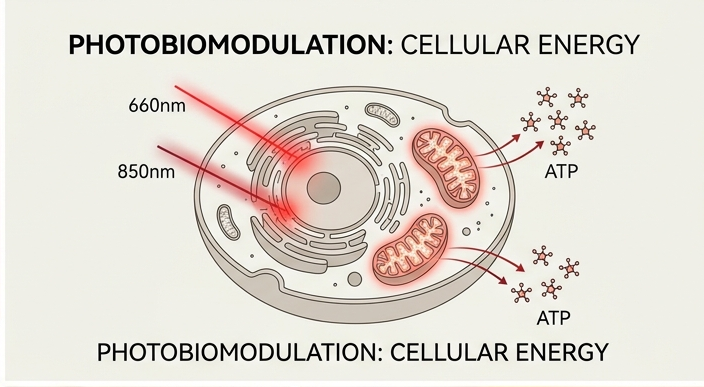
Photobiomodulation (PBM), sometimes called low-level laser therapy (LLLT) or light therapy, uses specific wavelengths of light to interact with biological tissue.
Unlike surgical lasers designed to cut or heat tissue, photobiomodulation uses non-thermal light intended to support cellular processes and recovery.³
Researchers continue studying PBM in relation to:
- circulation
- recovery and tissue support
- inflammation response
- wound healing
- muscle recovery
- nervous system regulation
- athletic recovery
- overall wellness support¹ ⁴
This growing body of research is one reason light therapy is increasingly appearing in:
- wellness clinics
- longevity programs
- physical rehabilitation
- sports performance environments
- biohacking communities
Why Biohackers Care About Mitochondria and ATP
One of the biggest reasons light therapy has gained momentum in biohacking circles involves mitochondria.
Mitochondria are often called the body’s energy factories because they generate ATP (adenosine triphosphate), the energy molecule that powers cellular activity.
Research suggests certain wavelengths of light, particularly red and near-infrared wavelengths, may interact with mitochondrial pathways involving cytochrome c oxidase, nitric oxide signaling, and cellular respiration.² ⁵
In simple terms:
cells with better energy production may have greater capacity to repair, recover, and function efficiently.
This connection between light and cellular energy is why many people interested in:
- recovery
- performance
- mitochondrial health
- longevity
- nervous system regulation
- wellness optimization
have become curious about light-based therapies.
Red Light vs Infrared Light: What’s the Difference?
Not all light therapies work the same way.
Different wavelengths interact with tissue differently.
Red Light Therapy
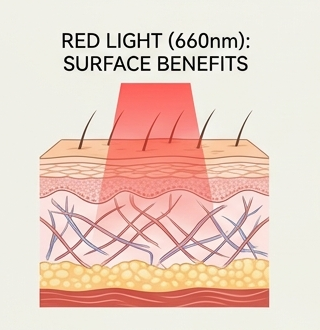
Red light is commonly associated with:
- skin support
- surface tissues
- circulation
- collagen support
- facial and cosmetic wellness
- soft tissue recovery⁶
Red wavelengths generally work closer to the surface of the body.
Infrared & Near-Infrared Light
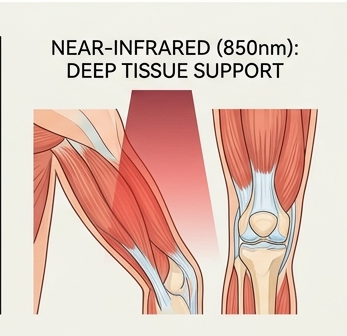
Infrared wavelengths penetrate more deeply and are often explored for:
- muscles
- joints
- tendons
- cartilage
- deeper tissue recovery
- circulation and comfort support⁷
This is why many advanced light devices combine multiple wavelengths rather than relying on only one type of light.
Why Healing Light Is Becoming a Wellness Movement
Perhaps what makes light therapy so compelling is that light is not foreign to the body.
Humans evolved in relationship with light.
Circadian rhythms, hormones, sleep cycles, mood, and cellular signaling all respond to light exposure.
Researchers continue exploring whether targeted wavelengths may support biological processes beyond ordinary light exposure alone.¹ ⁸
This has helped move healing light from a niche technology into a broader wellness conversation.
Today, light therapy is discussed alongside:
- biohacking
- longevity medicine
- nervous system recovery
- regenerative wellness
- non-invasive recovery tools
- at-home wellness technologies
The interest continues to grow because many people are seeking approaches that feel:
- supportive
- restorative
- non-invasive
- practical
Julie’s Philosophy on Healing Light
Long before “biohacking” became a popular term, Julie had already incorporated light-based tools into her wellness work.
Her philosophy remains simple:
support the body with tools that encourage restoration rather than overwhelm it.
Rather than viewing light as a stand-alone miracle solution, Julie uses it as one part of a larger wellness picture that may include:
- nervous system support
- environmental wellness
- individualized healing approaches
- nutrition and detox support
- scar and energetic assessment
- biofield and lifestyle considerations
For many people, healing light becomes another tool that supports resilience, recovery, and overall well-being.
The Future of Healing Light
Research into photobiomodulation is still evolving.
Not every question has been answered.
But one thing is increasingly clear:
the conversation around red light therapy, infrared healing, biohacking, and cellular wellness is only growing.
Perhaps that is because sometimes the most sophisticated solutions begin with something remarkably simple.
Light.
Curious how the Quantum Wave combines multiple light wavelengths in one handheld device?
References
- Dompe C. et al. Photobiomodulation: Underlying Mechanism and Clinical Applications
https://pmc.ncbi.nlm.nih.gov/articles/PMC7356229/ - Hamblin MR. Mechanisms and Applications of Photobiomodulation
https://pmc.ncbi.nlm.nih.gov/articles/PMC5844808/ - American Society for Laser Medicine & Surgery – Photobiomodulation Overview
https://www.aslms.org - PBM in rehabilitation and sports medicine research
https://www.mdpi.com/2411-5142/9/4/181 - Mitochondrial signaling and PBM
https://www.nature.com/articles/s41433-024-03091-4 - Research on red light therapy and skin/tissue support
https://www.ncbi.nlm.nih.gov - Near-infrared and deep tissue photobiomodulation studies
https://pmc.ncbi.nlm.nih.gov - Reviews on light signaling and biological response
https://www.sciencedirect.com
